The Earth is a non-human archive. Traces of synergetic design processes are inscribed into its surface. Its autopoietic images are made visible through climate change and extreme weather phenomena.
As it seems the Earth can no longer be thought without mankind since many changes are already irreversible. What if thinking mankind without the Earth doesn't make sense either? The planet Earth isn't just a passive playground for humans to act upon, but rather it's the main actor in a comprehensive and dynamic ecosystem. Therefore, environmental disasters, extreme weather and in general climate change phenomena become perceptible indicators for profound system changes and witnesses of preceding processes at the same time.
We propose a notion of the Earth as a living and ever-changing archive. Accelerated by human influence, effects of climate change reveal human design activities on larger scale that were inscribed and are not visible anymore.
Altogether, we are interested in the man-made climate change as a medium of indication. As a process of materialisation it visualises societal interventions on and against the Earth and its inhabitants through nature itself. The man-accelerated ecological processes, thus, become a method of post-human design. Without explicit human intention, effects of climate change reveal the evenly unintentional archival processes of human cultural activities of the Earth. A geo-epistemic serendipity which implies non-human distinction processes that are too sensitive for a human understanding of the world.
Stein, AR
Appenzell Ausserrhoden / 2025 Field Trip
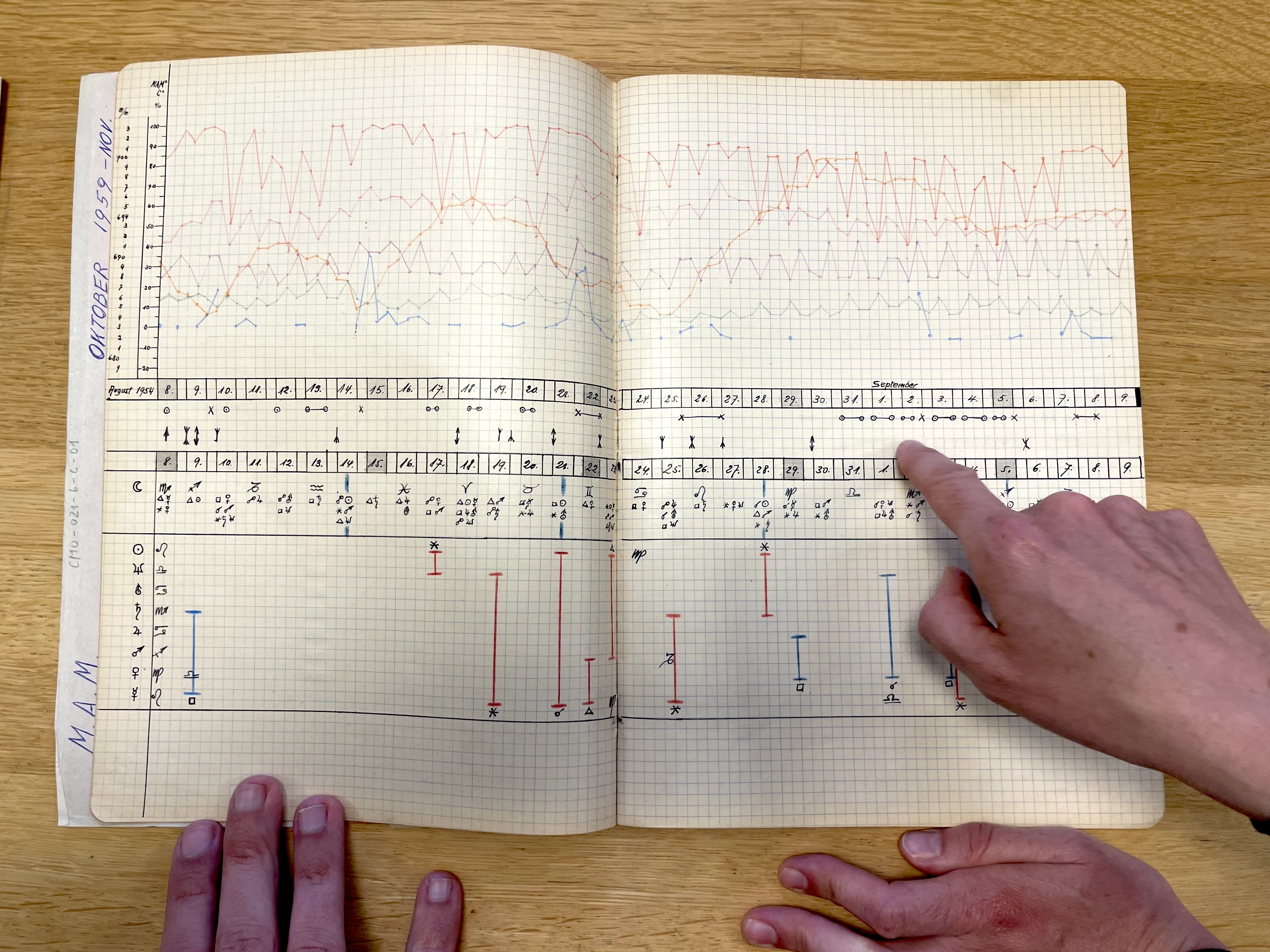
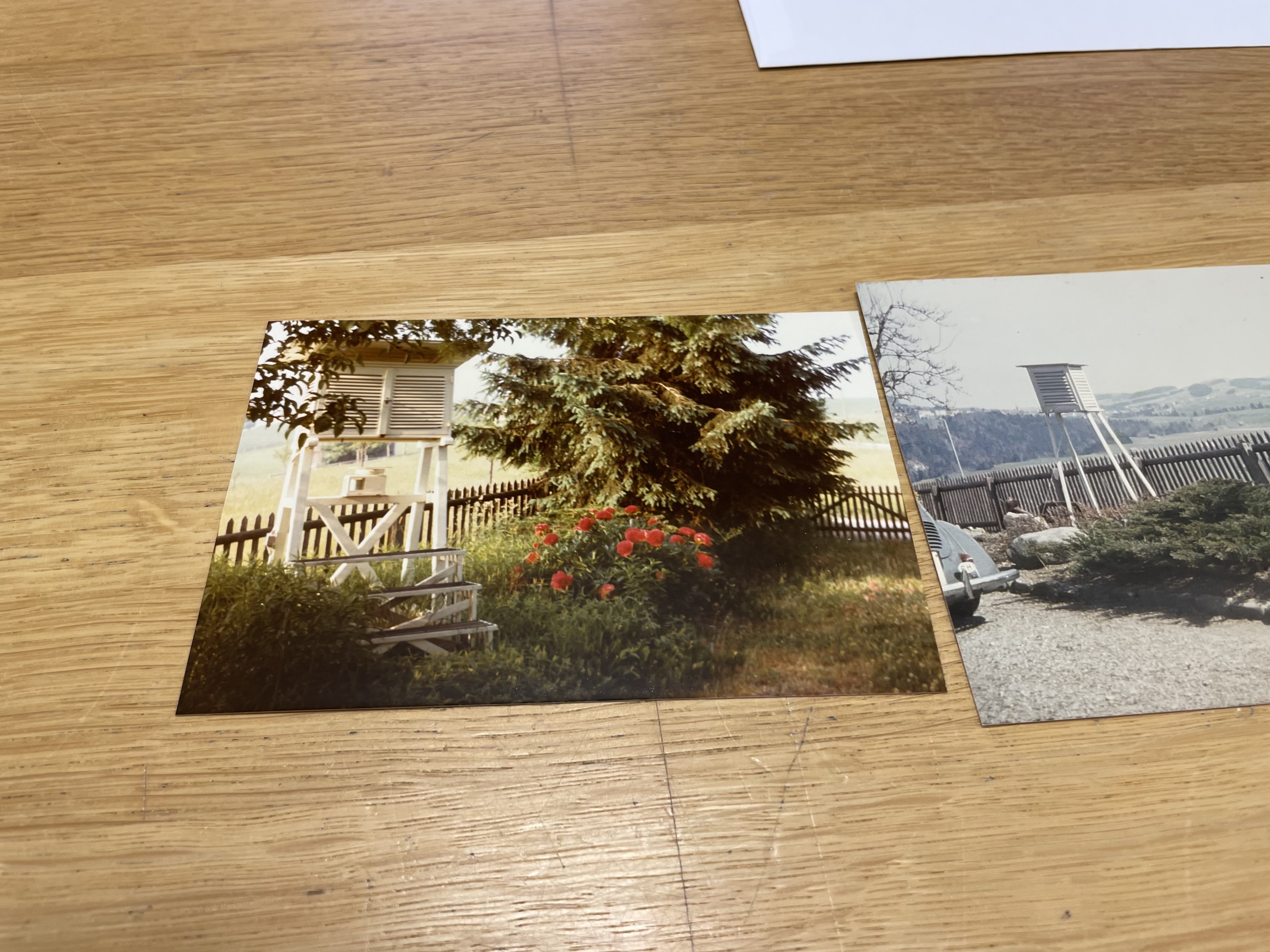
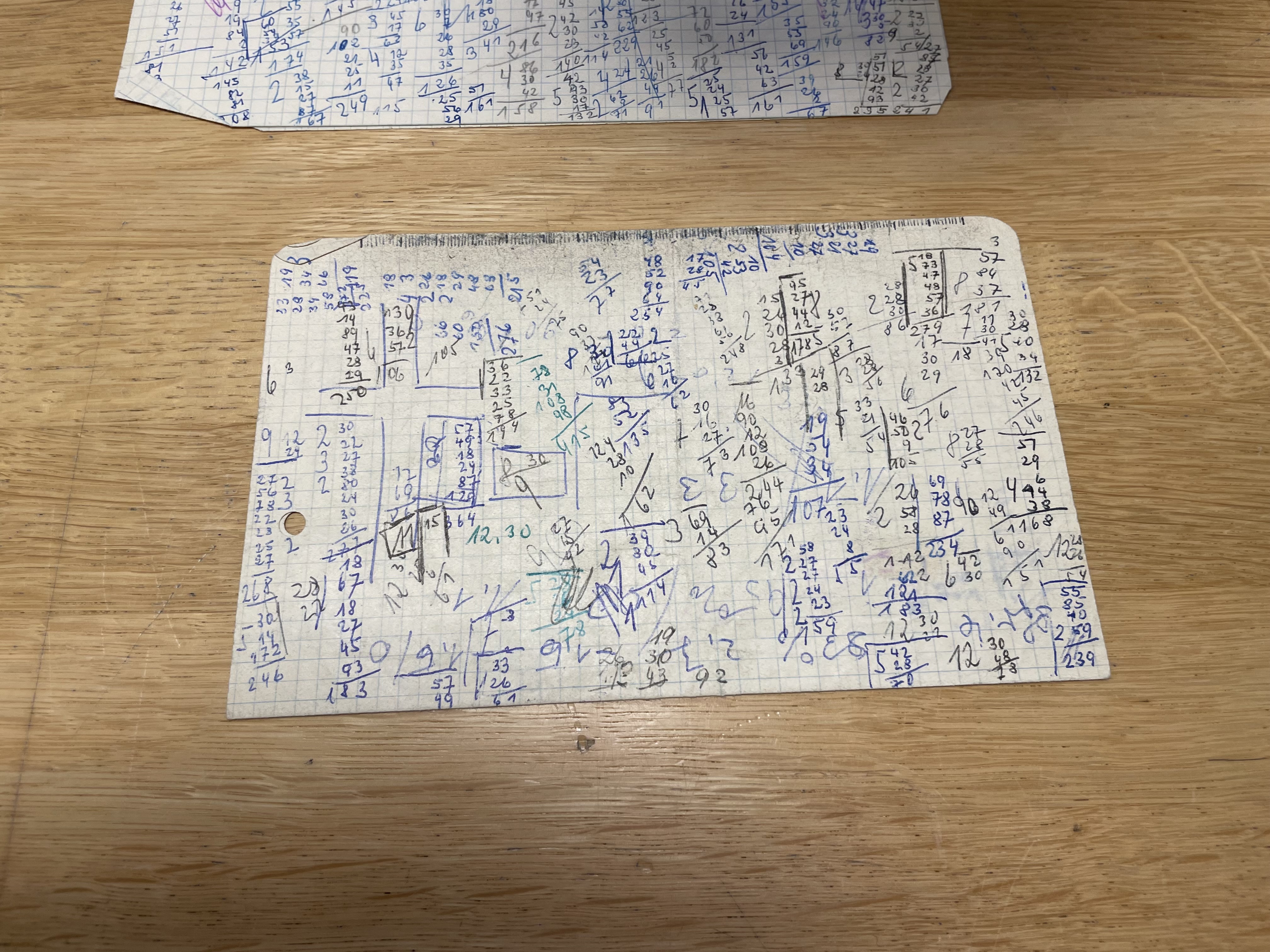
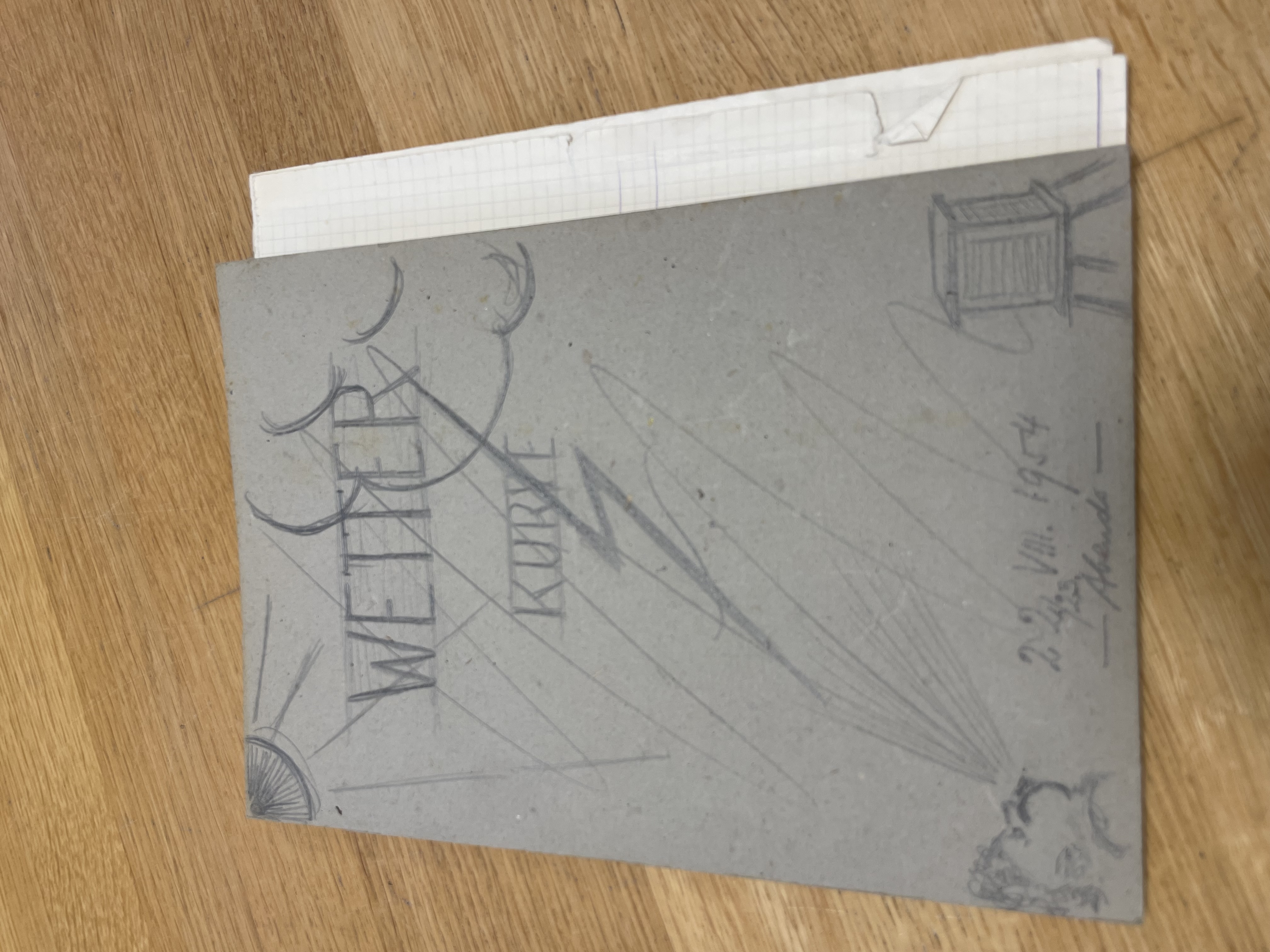
Our field trip to Stein, AR focused on the weather records of the former occult commune Abtei Thelema, where daily meteorological measurements were carried out for nearly five decades as part of a spiritual practice of attunement to the Alpine landscape. In the archive of the canton library, we examined weather logs, diagrams, ritual documents and objects to trace how empirical climate observation became entangled with cosmology, care work and local cultural imaginaries. By treating weather data as both scientific dataset and cultural artifact, we initiated a multimodal investigation into how climate knowledge can emerge from the reciprocal shaping of data, worldviews and place.